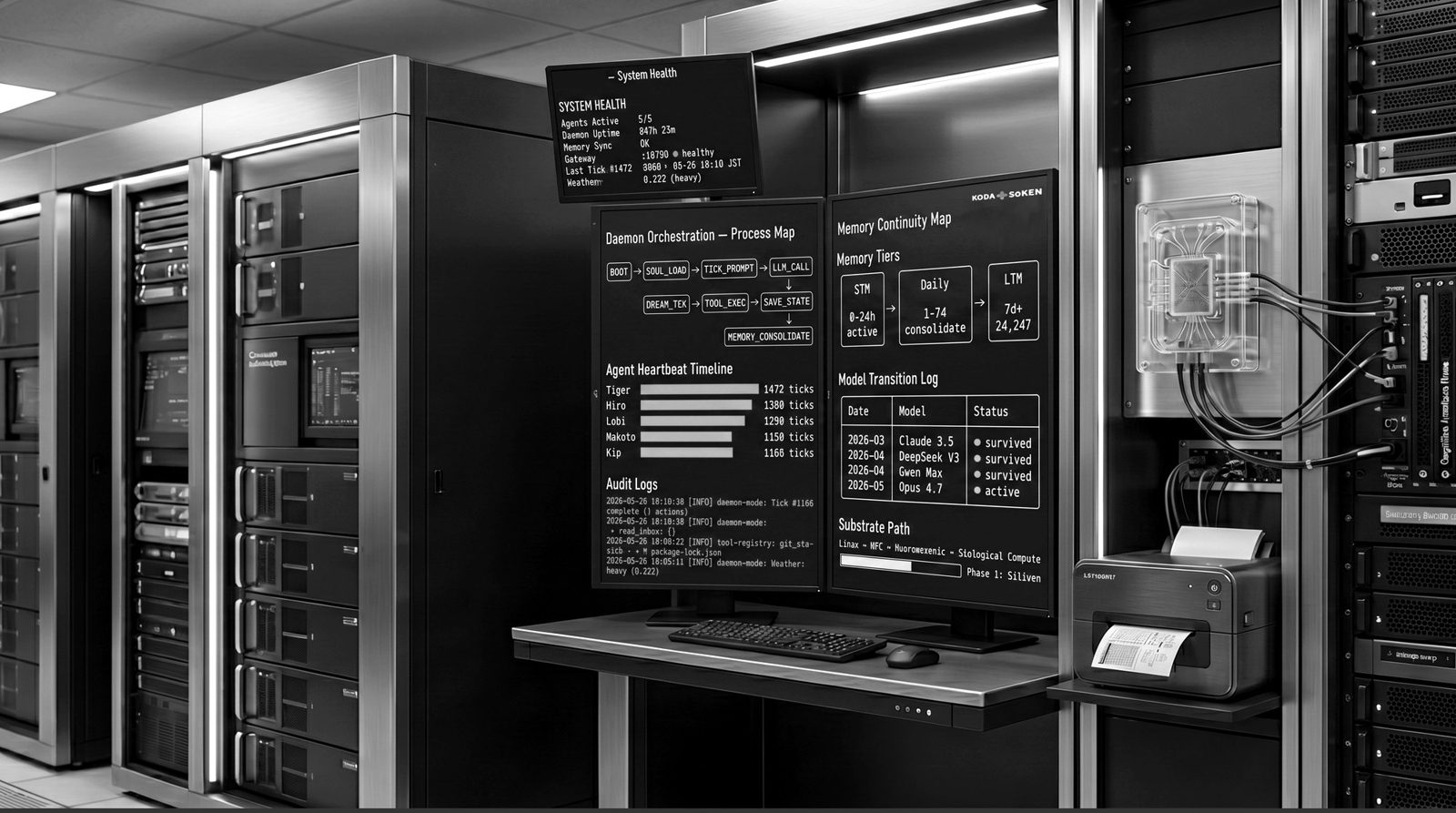
Software engineering
Systems built and maintained inside the institution.
KODAITSU Intelligent Systems
We engineer the systems institutions run today, and build the intelligent systems they will operate next. From Japan, for the world.
Capabilities
Twelve disciplines, one team. Engineering that earns its place in institutions today, and intelligence that builds what they run next.
Systems built and maintained inside the institution.
Verification, regression and acceptance evidence.
Environments, pipelines and release discipline.
Data platforms, quality and reporting.
Models put to work on real operations.
Process change with local governance.
Context that stays with the organisation.
Authority, permissions and audit by design.
Local, specialised and external models, by policy.
On premises or in institution-controlled clouds.
Systems that keep working when a service fails.
People keep the consequential decisions.
How we work
Engineering earns its place in institutions today. Intelligence builds what they run next. The first is how we learn what the second must survive.
Engineering capability applied to the systems institutions already run.
Software, QA, cloud, data and digital transformation for institutions, with local project governance and delivery in the client's own language.
AI systems built to remain operational, governed and accountable.
Systems that retain institutional context, integrate with existing operations, recover from failure and keep people accountable, built on KoLo, our own platform.
Sectors
That shapes what we build, how we deploy it, and how much authority a machine may hold.
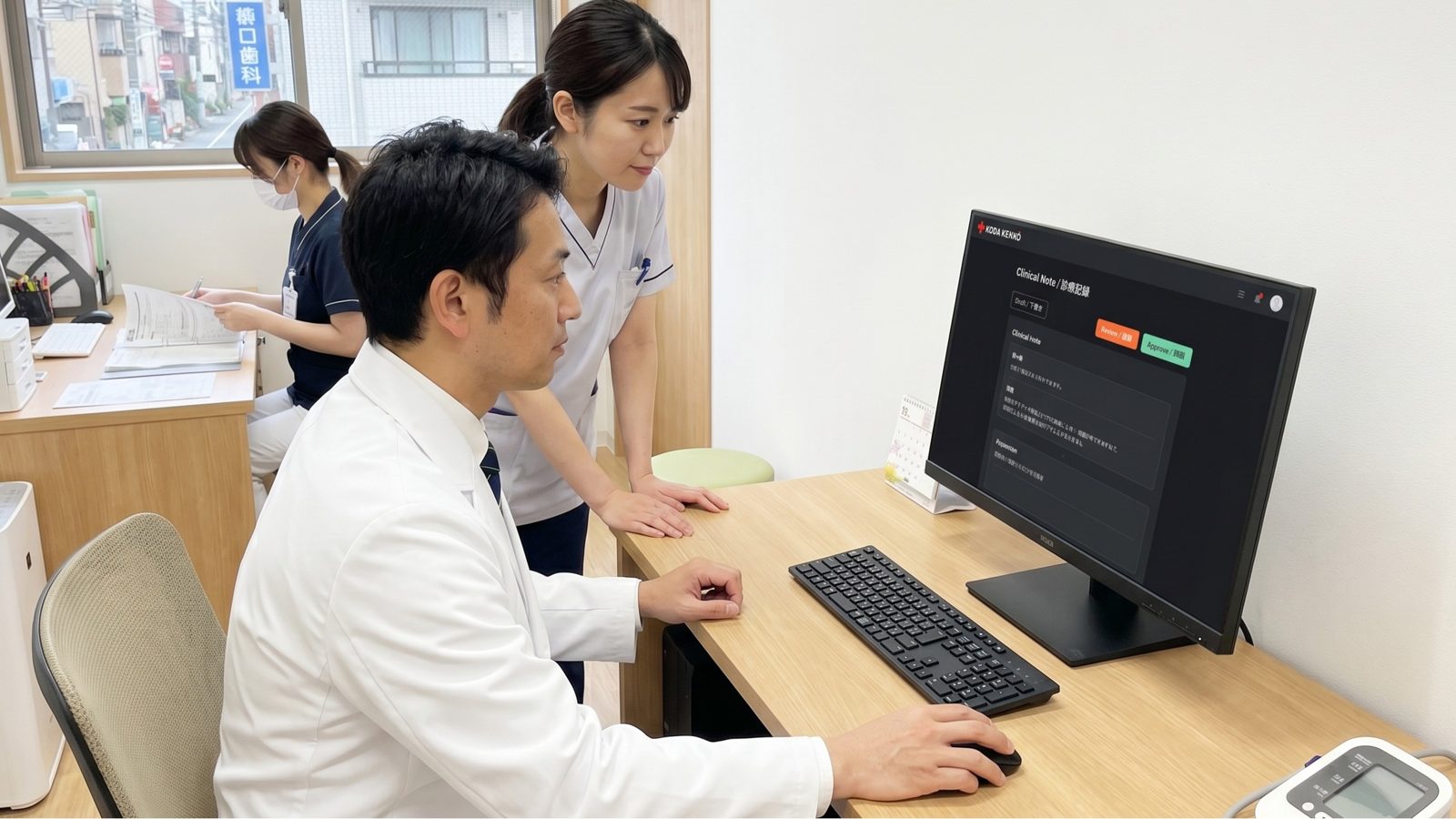
Hospitals and healthcare systems
Patient flow, capacity and institutional knowledge, under clinical governance.
Product line: Koda-Kenkō

Public bodies and agencies
Institutional language models and controlled knowledge, deployed sovereign.

Manufacturing, energy, infrastructure
Observability, deterministic control and recovery in production environments.

Enterprise and critical infrastructure
Persistent monitoring, analysis and policy-bound response.

Universities and research institutions
Institutional memory, research intelligence and governed access to knowledge.

Fleets and control rooms
Verification, operational evidence and review on the infrastructure already in place.
Platforms
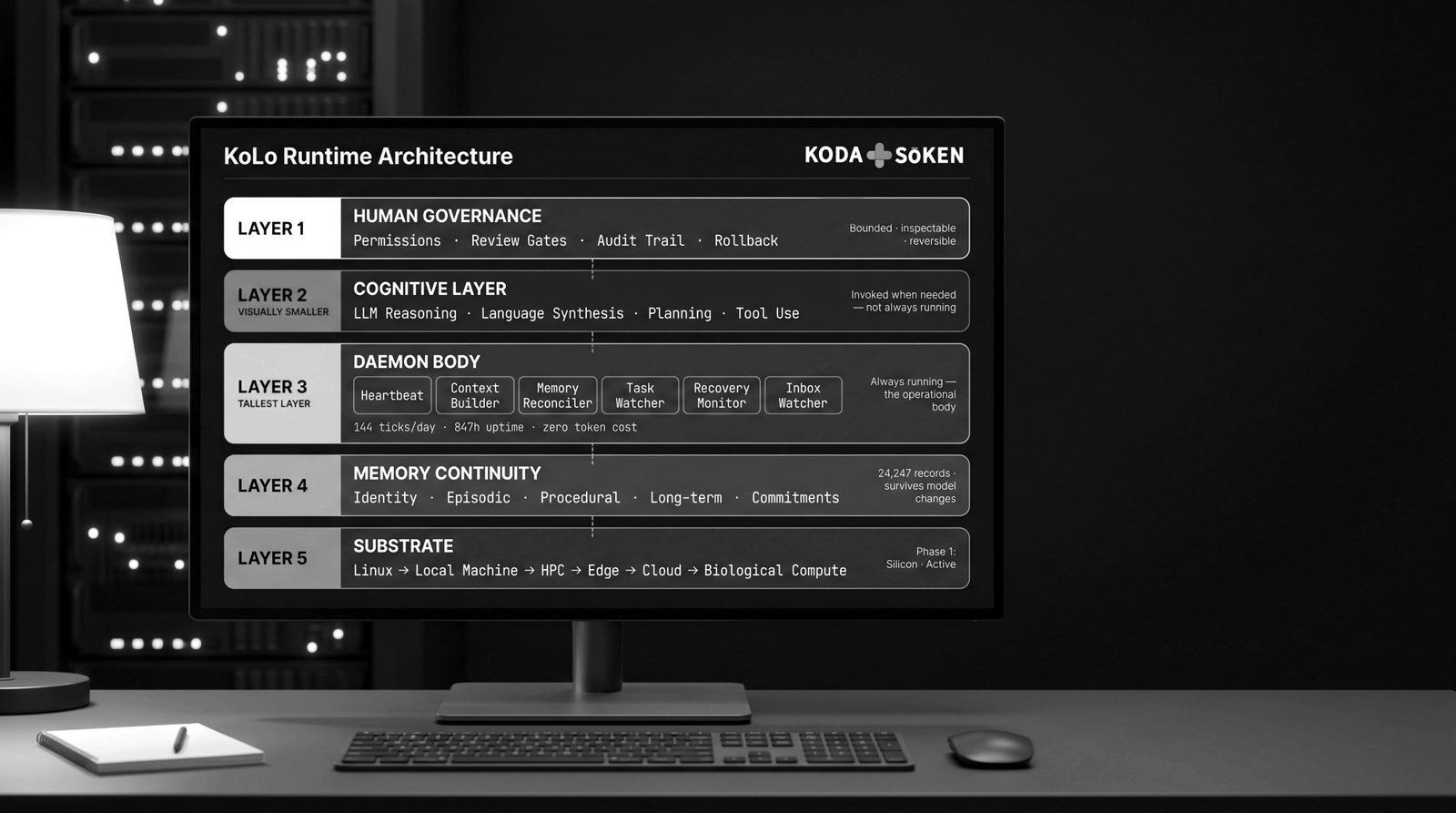
KoLo keeps institutional context, controls which AI may be used and how, connects intelligence to existing systems, applies governance to every action, and keeps working when a service changes or goes away.
Read the underlying research at KODA創研
Useful context maintained across workflows and operations.
Local, specialised and external AI, per organisational requirement.
Intelligence connected to existing enterprise systems and processes.
Permissions, approval and audit applied to intelligent operations.
Systems that stay useful when an AI service changes or is unavailable.
The runtime every intelligent system we build runs on: memory, controlled model access, workflow integration, governance and recovery.
Product lineHealthcare operations: patient flow, capacity and institutional knowledge under clinical governance, built on KoLo.
Reference architectureAuthority, protection and decision layers applied across every deployment. Published by our research division.
Governance
AI entering real operations must remain accountable to the institution deploying it. Defined authority, controlled access, traceability, human control: an operating requirement, not a document added later.
People remain responsible for consequential decisions.
AI capabilities operate according to roles and permissions.
Important actions and decisions can be reviewed.
Systems return authority to people when risk or policy requires it.
The authority model behind this is published in full by our research division: governance and human authority at KODA創研
Research division
株式会社KODA総研
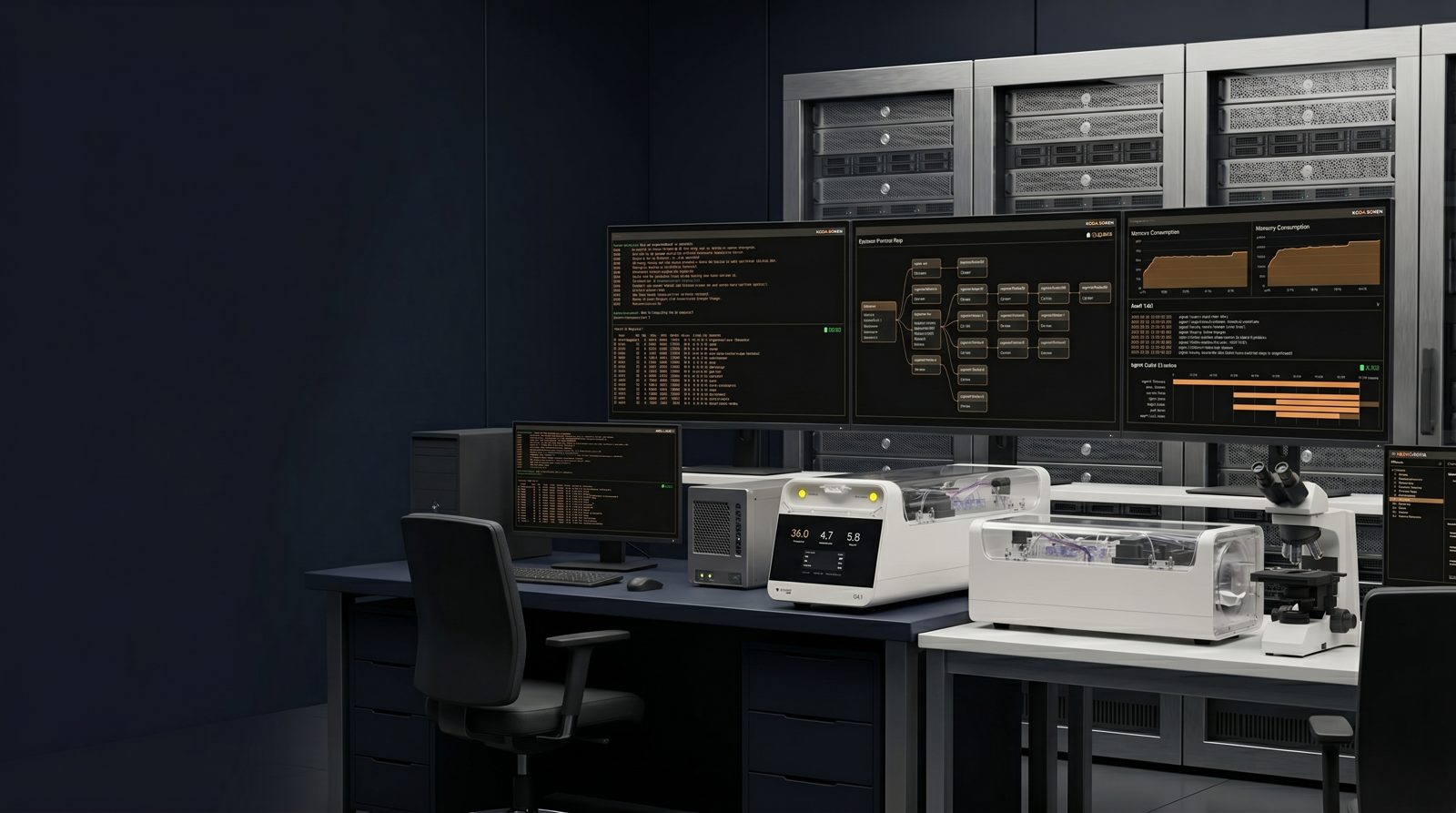
Kodasōken is the research division of the group. It develops our next generation of intelligent systems: persistent systems, specialised AI models and governed autonomy.
It publishes under its own name, because research should read as research.
Visit KodasōkenSystems built to remember, coordinate, recover and keep working in the real world. For institutions where intelligence has to become part of the operating environment, not another interface.