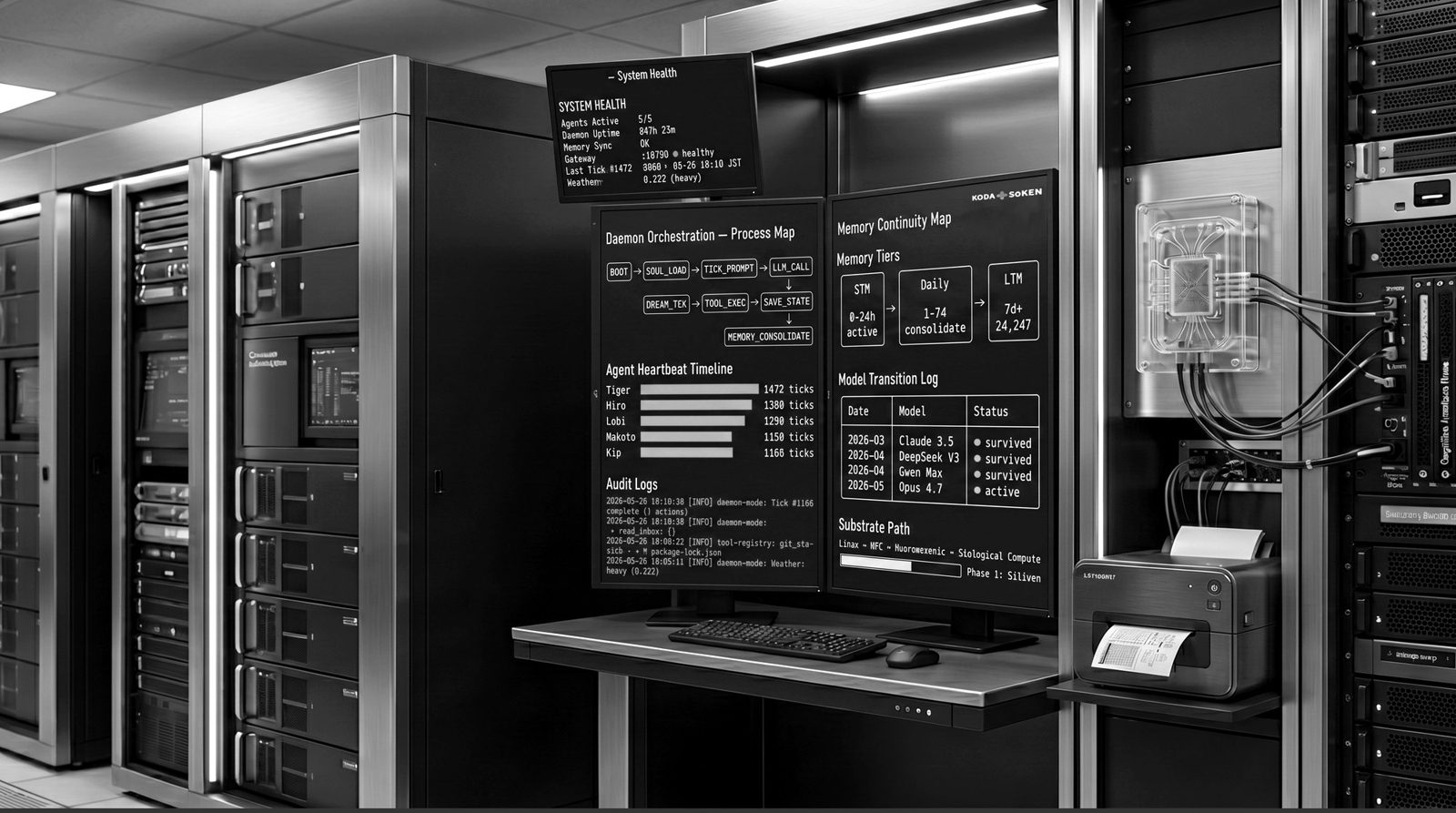
Guardian
Authority: identity, purpose, permissions and human approval. A gateway permission never confers institutional decision authority.
Platforms · KoLo
KoLo keeps institutional context, controls which AI may be used and how, connects intelligence to existing systems, applies governance to every action, and keeps working when a service changes or goes away.
KoLo is the runtime beneath every KODAITSU intelligent system. It is not a model and not a chatbot. It is the operating environment that makes a model useful, governed and survivable inside an institution.
Its research foundations are published by Kodasōken, our research division, under its own name.
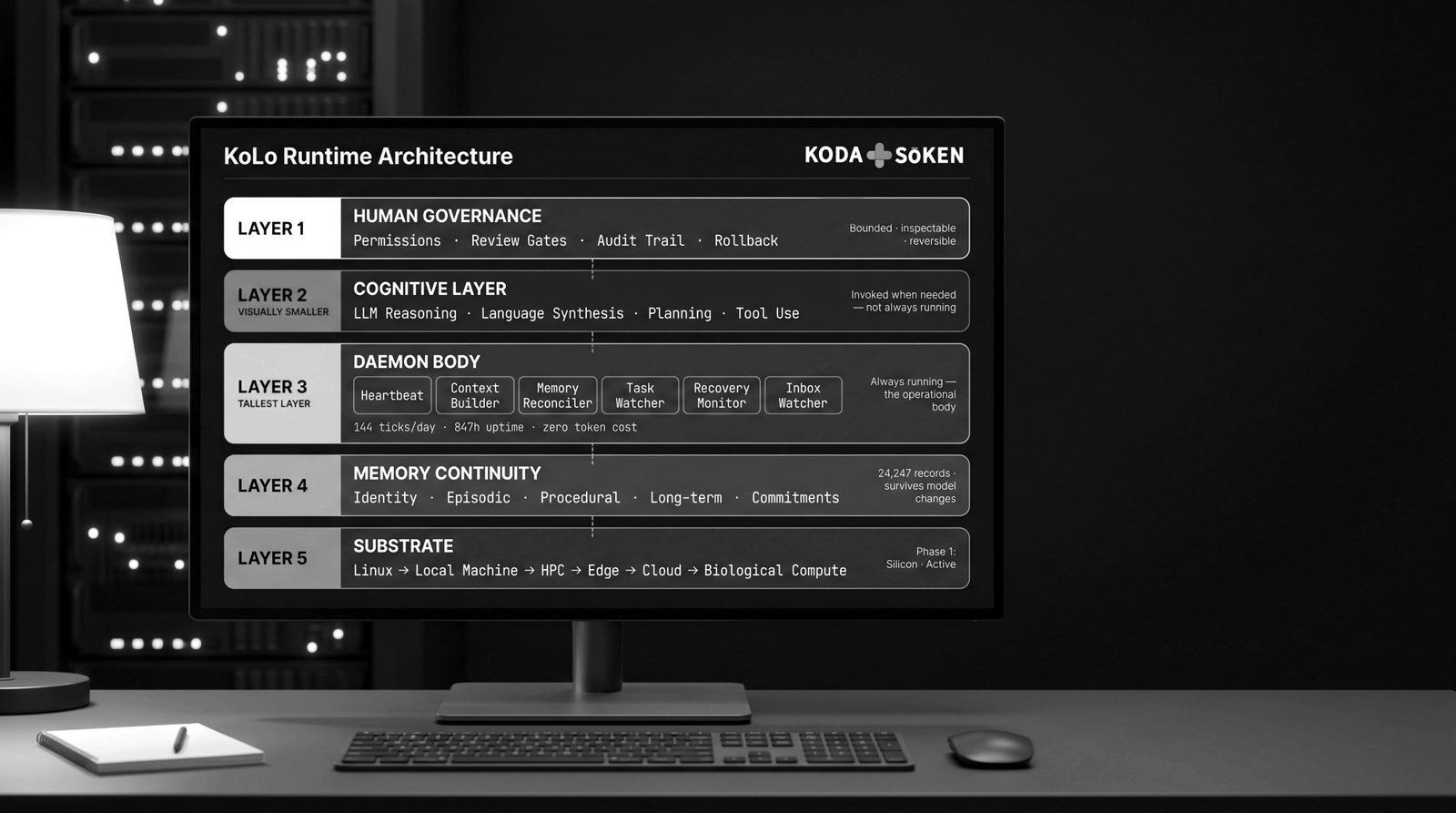
Five layers
Useful context maintained across workflows and operations.
Local, specialised and external AI, per organisational requirement.
Intelligence connected to existing enterprise systems and processes.
Permissions, approval and audit applied to intelligent operations.
Systems that stay useful when an AI service changes or is unavailable.
Reference architecture
Authority: identity, purpose, permissions and human approval. A gateway permission never confers institutional decision authority.
Protection: containment, refusal at the memory and tool boundary, and recovery when something breaks.
Intelligence: evidence, analysis and operational decisions connected in one view.
At a glance
We show a grounded answer with its source, an injected instruction refused at the boundary, and continuity when an external service is lost. Then your engineers drive.